English
 Română
  Русский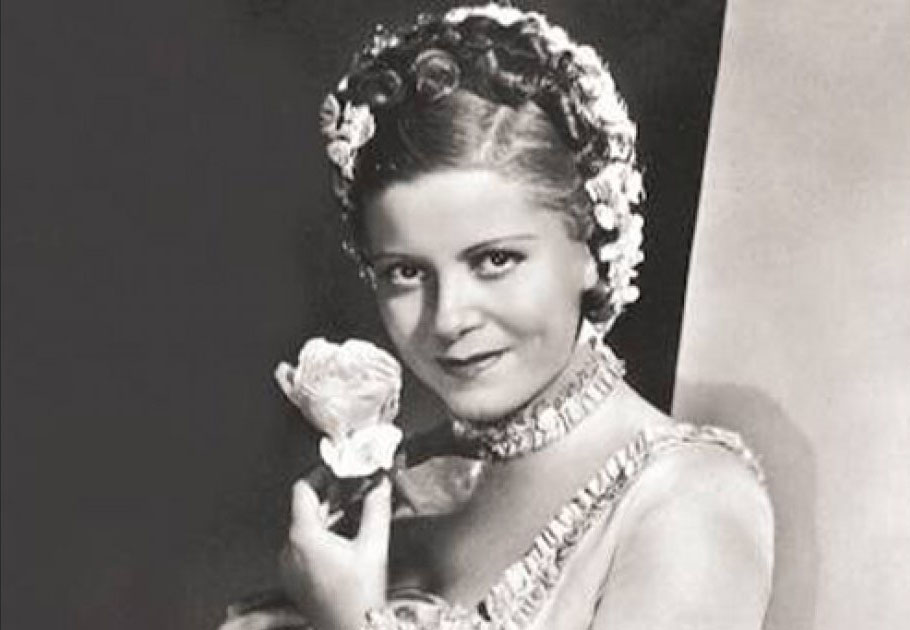
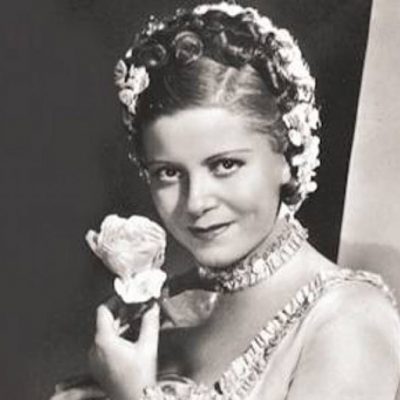
Maria Cebotari (1910- 1949)
Opera singer, the famous “Nightingale of Bessarabia” – one of the greatest sopranos in the world in the 1930s and 1940s.
She studied at the normal school for girls Florica Niță and at the Metropolitan Chapel in Chisinau, directed by Mihail Berezovschi, after which she attended the “Unirea” Conservatory in Chisinau (1924-1929), being a disciple of three famous pedagogues of that time – Maria Zlatov, Gavriil Afanasiu and Anastasia Dicescu.
After graduating from the Chisinau Conservatory, she was employed as an actress at the Moscow Art Theatre. In 1929 she went to Berlin with the troupe, where she took singing lessons. She made her debut in 1931 at the Dresden Opera as Mimi in Giacomo Puccini’s Boema. She remained there as a soloist until 1943. From 1935 to 1943 she also performed at the Berlin State Opera. Later she was employed as a permanent soloist at the Vienna State Opera, where she remained until her death.
At the age of only 24, Maria Cebotari was awarded the highest honorary title (in the dramatic arts) in Germany and Austria at that time – Kammersängerin, as well as the Romanian Star in the rank of Commander.
Although for a long time she was stigmatized as “prima donna of the Reich”, and her name was banned during the USSR, a real life case demonstrated her firm stance against the fascist regime. For a long time Berlin saw that Joseph Paul Goebbels, the third person in Nazi Germany after Hitler, was beaten with a bouquet of flowers, given to his neighbour, who was none other than the singer Maria Cebotari.
She starred in 8 films, shot in Germany and Austria, alongside stars of the cinema at the time, including her husband Gustav Diessl.
The great soprano is named not only after a street in her home town of Chisinau, but also after streets in Vienna and Dresden.