Let’s first talk about the biography of Queen Natalia Cheșco-Obrenovic.
Natalia was born on May 15, 1859, in Florence, the daughter of Petre Cheșco, a descendant of a branch of the Wassilko family, a Basarabian colonel in the Russian army, and Pulheria Sturdza, a member of the Sturdza family of noblemen from Moldavia, and granddaughter of the Moldavian prince Ionita Sandu Sturdza. Orphaned at an early age, Natalia was raised by her uncle, Constantin D. Moruzi, who owned the Danuteni estate near Ungheni, Bessarabia. Natalia traveled frequently to Iasi, Vienna, Odessa, and Chisinau. When in Chisinau, Natalia stayed at her grandmother Zamfira Cazimir-Cheșco’s house. Grandfather Ioan Cheșco was a member of the Supreme Council of Bessarabia, as well as a leader of the nobility of the counties of Chisinau and Orhei, then of Soroca and Iasi.
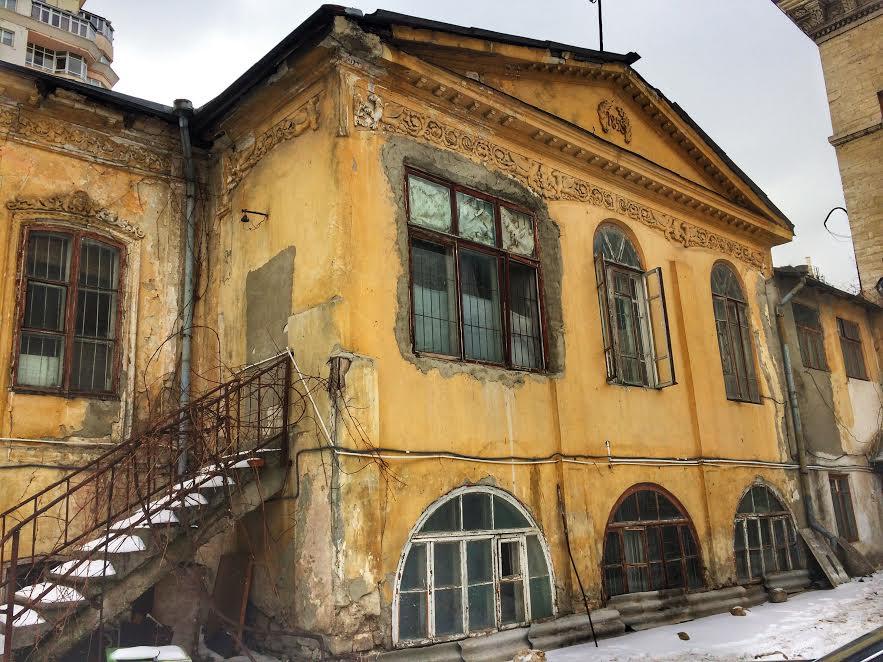
These two could not have an ordinary house, so they bought from Prince Mihai A. Cantacuzin a house with 11 rooms, which was built according to a project confirmed by the Construction and Roads Commission in November 1857, the construction being finished in 1858. The house is built in the “Turkish Empire” style, with a location that was rare in Chisinau at the time: in the middle of a garden, away from the street.
A few years later, in Vienna, Natalia met her future husband, Prince Milan Obrenovic of Serbia, and it was here that their engagement took place. Milan Obrenovic was born in exile in Moldova as the son of Miloš Obrenović and Elena Maria Catargiu from Moldova (known in Serbia as Marija Obrenović). Shortly after his birth, his parents divorced. Two years later, at the age of seven, Milan lost his father who died in battle with the Turks near Bucharest. His mother, Maria, was given legal custody, but soon became the mistress of the ruler Alexandru Ioan Cuza with whom she had two children – Sașa and Dimitrie. Because of this, she neglected her child from her marriage to Milos, so an agreement was reached that young Milan would be legally adopted by his cousin, Mihailo Obrenovich III, who had become the prince ruler of Serbia.
On Sunday, October 17, 1875, a religious wedding took place in Belgrade Cathedral between Natalia and Milan, the son of Alexander Ioan Cuza’s mistress. The couple had two sons, the future King Alexander I, born in 1876, and Sergei, who died a few days after his birth in 1878.
When Prince Milan proclaimed the Kingdom of Serbia in 1882, Princess Natalia became Queen of Serbia. In 1888, the couple divorced. Five years later, in 1893, they reconciled and asked the church to annul their divorce. In 1889, after the abdication of King Milan, his and Natalia’s son Alexander became King of Serbia as Alexander I. The new King Alexander and his wife Draga Mašin were assassinated by the Black Hand organization in 1903 for ‘pro-western attitudes’. Queen Natalia remained the only living member of the Obrenovic dynasty. The queen donated her wealth to the University of Belgrade, churches, and monasteries in Serbia, then converted to Catholicism. She became a nun in 1903 and worked as a nurse for several years. The former queen spent the rest of her life in France. She died in 1941 in St. Denis, and her memoirs are preserved in the Vatican Museums.
The Cazimir – Cheșco Mansion, located at 24 Serghei Lazo Street, is the first building to appear in this area and is unfortunately currently in disrepair.

 English
 Română
  Русский