English
 Română
  Русский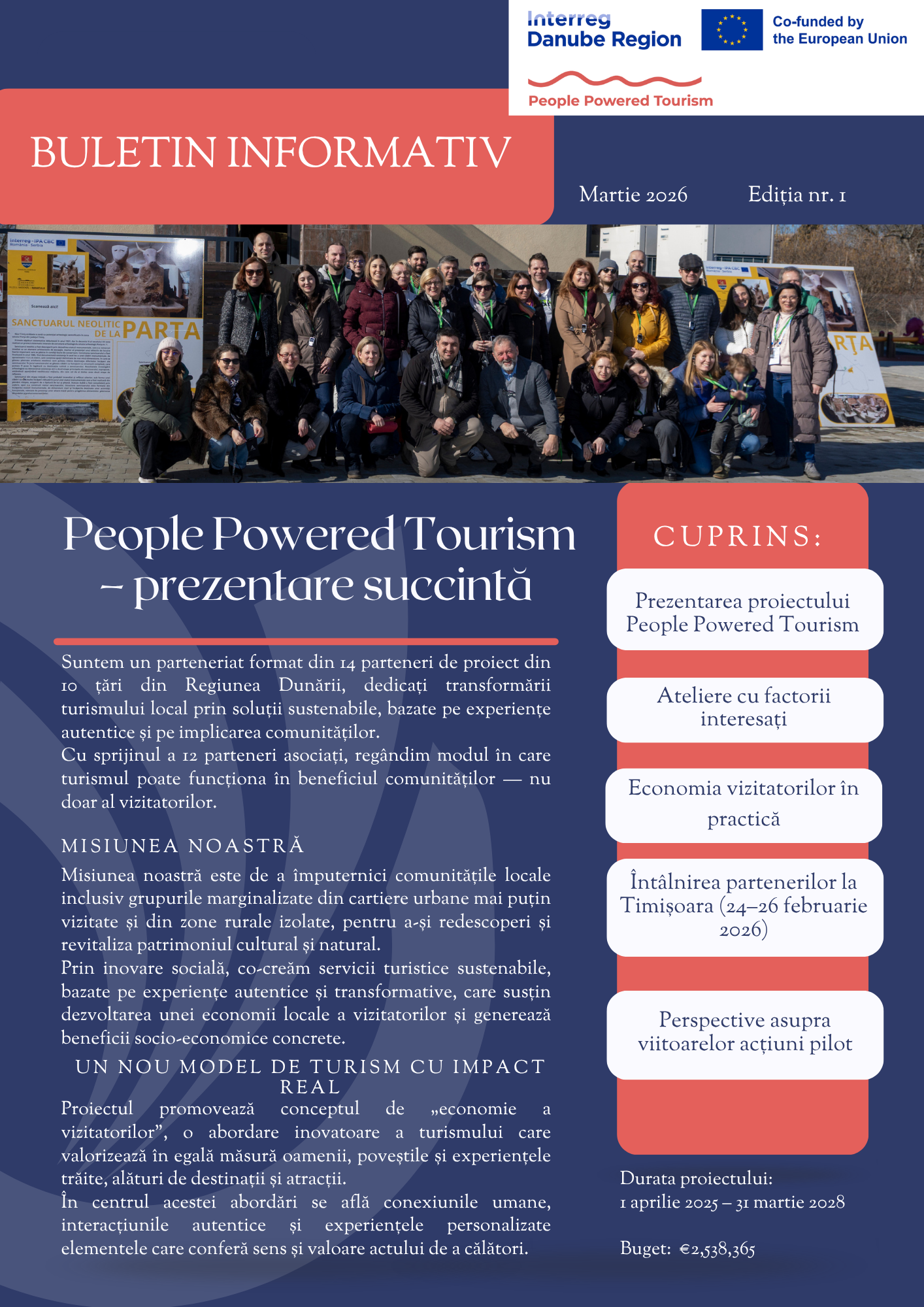
The first newsletter of project People Powered Tourism
People Powered Tourism: Local Communities at the Heart of Sustainable Tourism Development
The People Powered Tourism project, implemented within the Interreg Danube Region Programme, brings together 14 partners from 10 countries with the shared goal of transforming local tourism through sustainable solutions based on authentic experiences and active community involvement.
In collaboration with 12 associated partners, the project aims to rethink how tourism can function for the benefit of local communities, not only visitors. The initiative focuses on safeguarding cultural and natural heritage while developing tourism services that generate tangible socio-economic benefits.
Visitor Economy – A New Model for Tourism Development
A key pillar of the project is the promotion of the Visitor Economy concept—an innovative approach that places people and authentic experiences at the center of tourism development.
As part of the project, a comprehensive study has been published, examining how communities across the Danube Region can play a decisive role in developing sustainable and inclusive tourism. The study highlights the need to move beyond traditional destination promotion models toward approaches centered on meaningful interactions between visitors and local communities.
By placing communities at the heart of tourism development, destinations can create authentic experiences, strengthen local identity, and enhance long-term economic resilience. The publication also presents best practice examples from across the region, demonstrating how local authorities, tourism organizations, and small businesses can collaborate to co-create innovative tourism services.
Stakeholder Workshops Supporting Local Capacity
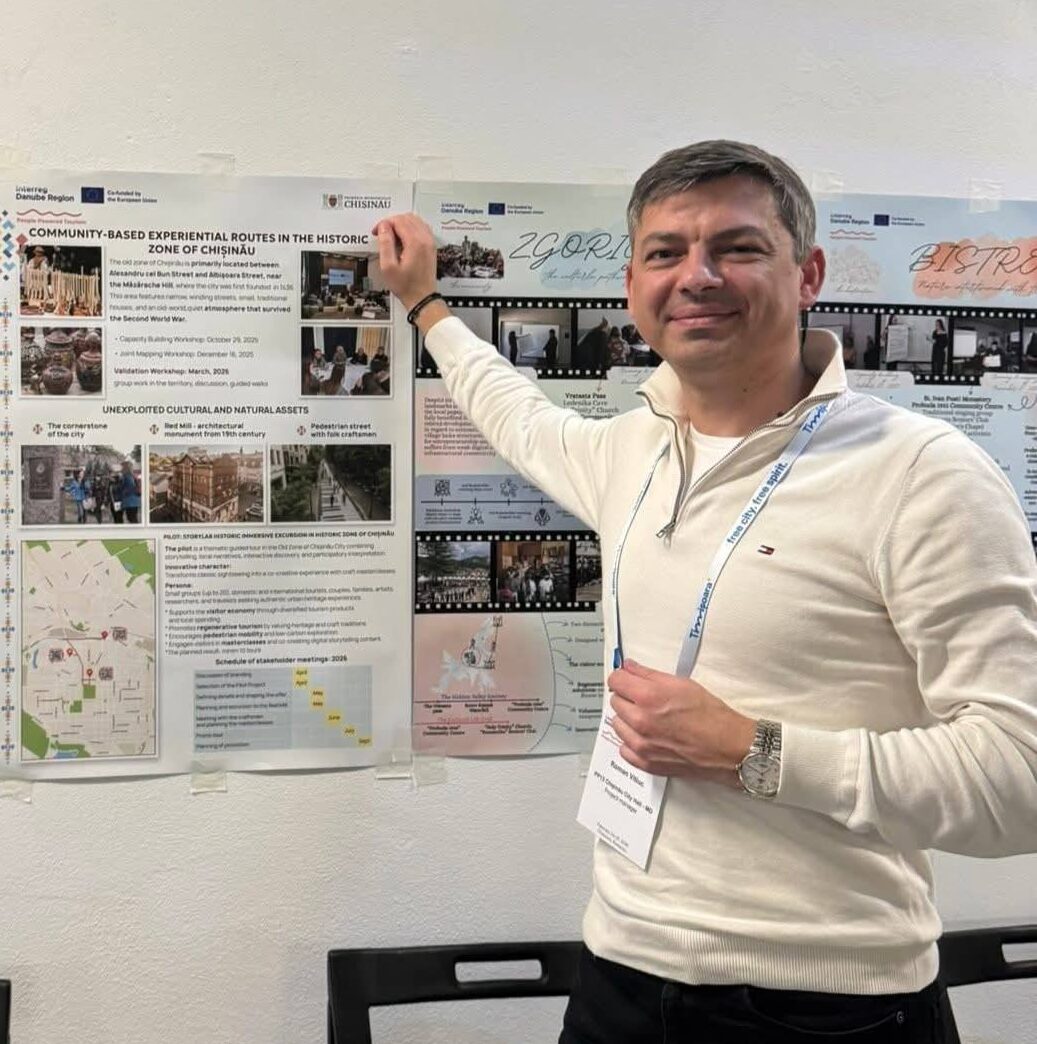
In recent months, project partners have organized a series of stakeholder workshops aimed at strengthening local capacities and supporting the mapping of cultural and natural resources.
These activities brought together representatives of public authorities, tourism organizations, cultural heritage experts, environmental specialists, and local entrepreneurs. Building on knowledge gained during the kick-off masterclass in Szeged (Hungary) and the study visit to Vienna, participants conducted collaborative mapping of local resources.
The workshops emphasized the importance of local stakeholder involvement in developing innovative tourism services, particularly in urban tourism and nature-based tourism.
Partner Meeting in Timișoara
Between 24–26 February 2026, project partners gathered in Timișoara for three days of intensive collaboration, knowledge exchange, and on-site validation of activities.
Hosted at the creative hub FABER, the meeting combined professional dialogue with hands-on experiences. Participants presented the outcomes of capacity-building and mapping activities and discussed pilot action ideas scheduled for implementation during the current year.
A central highlight of the meeting was a series of walkshop activities organized in the historic Fabric district of Timișoara. These activities allowed participants to explore initiatives demonstrating the role of community engagement, social innovation, and creative entrepreneurship in regenerating less-visited urban areas.
Additionally, partners conducted a field visit to the village of Parța, where they explored how community-based tourism can capitalize on local traditions, crafts, and gastronomy. These activities reinforced the importance of transnational cooperation and the exchange of best practices in developing sustainable tourism solutions.
What Comes Next: Pilot Actions in Communities
Starting from mid-April, in Kóspallag (Hungary), the project will launch a series of pilot actions that will be implemented across all partner locations until November.
These initiatives will test innovative visitor economy experiences designed to distribute tourism flows more evenly and connect popular destinations with lesser-known areas and local communities.
The pilot actions will include:
- hands-on workshops focused on traditional crafts and local gastronomy;
- storytelling activities and community-led guiding experiences;
- nature protection initiatives and environmental education programmes;
- outdoor activities encouraging direct interaction between visitors and local communities.
Through these activities, the project aims to create authentic connections between visitors, local culture, and the natural environment, contributing to the development of sustainable and responsible tourism.
About the Project
The People Powered Tourism project runs from 1 April 2025 to 31 March 2028, with a total budget of €2,538,365. The project is supported by the Interreg Danube Region Programme and co-funded by the European Union.