The Green Theatre in Chisinau is a true gem for both citizens and tourists, situated in Valea Morilor Park in [..]
Green Theater
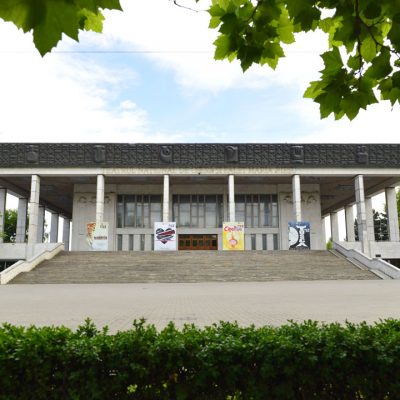
The Green Theatre in Chisinau is a true gem for both citizens and tourists, situated in Valea Morilor Park in the capital.
The Green Theatre, formerly known as the Summer Theatre, was constructed 60 years ago by architects A. Kolotovkin and T. Lomova.
An open-air theatre with a beautiful stage and hundreds of benches, it serves as a perfect example of Soviet architecture from the 1960s.
In every large park in the Soviet Union, there were numerous summer theatres. Chisinau, being one of the greenest capitals in Europe, was an excellent illustration of this. Summer theatres acted as public stages where the local community could enjoy various theatre performances, folk dances, and song competitions. Everyone was completely free to showcase their talent or passion in front of the community. Now, following rehabilitation, the Green Theatre hosts the most exquisite concerts featuring nationally and internationally renowned performers.
Thanks to the theatre’s central location in the heart of Valea Morilor Park, it is an ideal venue for hosting a variety of events during the warm season.
It was founded on October 6, 1921, at the initiative of several personalities led by Sergiu T. Niță, who was [..]
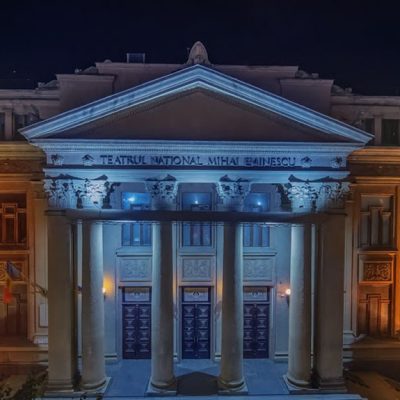
National Theater ”Mihai Eminescu”
It was founded on October 6, 1921, at the initiative of several personalities led by Sergiu T. Niță, who was the Minister of Bessarabia in the Romanian government. Other notable figures involved in its establishment included Stefan Ciobanu (a member of the Romanian Academy), writers Nicolae N. Beldiceanu, Nicolae Beldiman, Leon Donici, and director Gheorghe Mitu Dumitriu.
The inaugural season commenced with the performance of “Fântâna Blanduziei” by Vasile Alecsandri. Despite operating for only one season, the theater successfully staged over 25 productions. In 1922, responding to a request from the Ministry of Culture in Bucharest, a project was developed to establish a Permanent Propaganda Troop of the Ministry of Arts for Bessarabia, Bukovina, and Transylvania. Bucharest actors Vasile Leonescu and Constantin Mărculescu were entrusted with the reorganization of the Chisinau Theater.
Over the next 10 years, the National Theater in Chisinau was directed by notable individuals such as George Topârceanu, Corneliu Sachel Arescu, and Ion Livescu. Renowned actors like Emil Botta, Stefan Braborescu, Sergiu Cujbă, and Mişu Fotino breathed life into characters and stories on the stage of Chisinau’s first professional theater.
However, due to financial constraints, as per the ministerial order of 1935, the National Theater in Chisinau, along with those in Craiova and Chernivtsi, was forced to close its doors.
Many years later, in 1994, the National Theater was revived under the name Mihai Eminescu. In a relatively short span, the Mihai Eminescu National Theater garnered approximately 30 significant awards, winning acclaim not only from the Chisinau audience but also earning recognition at national competitions and international festivals.
On July 5, 1957, the Minister of Culture of the MSSR, A. Lazarev, signed the order for the establishment of [..]
National Opera and Ballet Theatre “Maria Bieșu”
On July 5, 1957, the Minister of Culture of the MSSR, A. Lazarev, signed the order for the establishment of the Moldovan State Theater of Opera and Ballet “A.S. Pushkin,” marking an epochal moment for the further development of this prominent institution of national culture. The historical journey of the Moldovan Opera House begins its chronological account one year before the signing of the ministerial document – from the staging of the first Moldovan national opera on June 9, 1956, specifically, the opera “Grozovanul” by David Ghersfeld.
The theater has undergone several stages of development. The initial period shaped the repertoire and solidified the works, while the period of development of the academic singing school introduced unique names to the world, such as Prima Donna Maria Biesu. She earned the title of the world’s First Cio-Cio-San in 1967 and shared the stage with lyrical performers like Miura Tamaki (in Tokyo, Japan).
In 1983, the premiere of the national ballet “Luceafarul” took place, based on Mihai Eminescu’s poem. “Luceafarul” represents the first ballet work of the composer Eugen Doga.
In September 1990, due to the insistence of the Prima Donna, the First International Festival of Opera and Ballet Stars was inaugurated in Chisinau, titled “The Invitation of Maria Biesu.”
Following Maria Biesu’s death in 2012, the Festival’s name changed to the “Maria Biesu International Festival.” Today, the Festival stands as one of the main symbols of culture in the Republic of Moldova, with Chisinau emerging as one of the capitals of opera and ballet music in Europe.
It is one of the most famous theaters in Chisinau, founded on 11 September 1991. The theater was created at [..]
National Theatre “Eugene Ionesco”
It is one of the most famous theaters in Chisinau, founded on 11 September 1991. The theater was created at the initiative of a team of actors, graduates of the B. Shchukin Theatre School in Moscow, led by Petru Vutcărău. The playwright Eugène Ionesco personally agreed that the new theater should bear his name, a deeply symbolic gesture. Petru Vutcărău was the first director and artistic director of the theater, and he currently serves as the theater’s director.
The new troupe, already called the “Eugene Ionesco” Theatre, was temporarily based in Romania, in Râmnicu-Vâlcea, where they were provided with accommodation and a stage for performances. After five months of work in Vâlcea, the theater embarked on its first major tour, visiting the biggest cities of Romania. During this period, the troupe, taking its first steps, won several awards at various theater festivals and recorded two shows from its repertoire on Romanian Television.
In the summer of 1991, the theater returned to Chisinau. Its seat was temporarily located in different places, but finally, in February 2007, by governmental decision, the “Eugène Ionesco” Theatre was granted its own place – the building of the former recreation center, called “Moscow.”
The National Theater “Satiricus Ion Luca Caragiale” is a municipal drama theater in Chisinau, the capital of the Republic of [..]
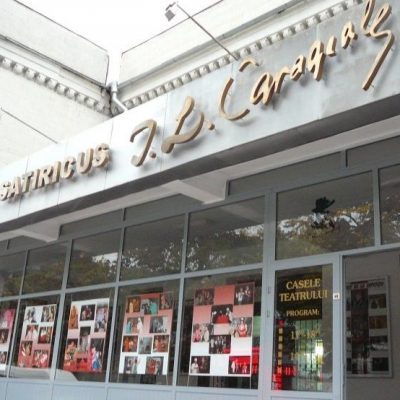
National Theater “Satiricus”
The National Theater “Satiricus Ion Luca Caragiale” is a municipal drama theater in Chisinau, the capital of the Republic of Moldova. It was established in 1990 through the initiative of the actor and director Sandu Grecu.
The theater’s repertoire primarily features satirical and humorous plays. It stands as the first satirical theater in the republic, born out of cultural and historical necessity, reflecting an innovative and combative spirit. Despite changing its location four times over its more than 30 years of existence, the theater has presented approximately 70 productions, with some enduring in the repertoire throughout the years.
The Republican Theater “Luceafărul” was established in 1960 as a theater for children and youth. On September 30, following the [..]
Republican Theater “Luceafarul”
The Republican Theater “Luceafărul” was established in 1960 as a theater for children and youth. On September 30, following the order of the Minister of Culture of the Moldovan Soviet Socialist Republic, Arteom Lazarev, and in accordance with the decision of the Bureau of the Central Committee and the College of the Ministry of Culture, invoking the meeting of August 18, 1960, it was decreed to rename the Youth and Children’s Theater to the “Luceafărul” Theater for Youth and Children.
From 1960 to 1991, “Luceafărul” was officially recognized as the Theater for Youth and Children, as specified in the founding order of the institution. In 1991, through the order dated March 18 and signed by the Minister of Culture and Cults of the Republic of Moldova, Mr. Ion Ungureanu, the “Luceafărul” Theater was granted the status of a dramatic theater and underwent a name change to become the “Luceafărul” Republican Theater.
Since 1991, the institution has been operating under the designation of the Republican Theater “Luceafărul,” being under the jurisdiction of the Ministry of Education, Culture, and Research of the Republic of Moldova.
It first opened its doors on November 27, 1992. From its inception, the theater was conceived as an institution to [..]
Municipal Puppet Theatre “Guguță”
It first opened its doors on November 27, 1992. From its inception, the theater was conceived as an institution to educate children in the national spirit and to promote the cultural values of the nation. The idea for such a theater originated from a group of intellectuals of the time, including the first mayor of Chisinau after independence, Mr. Nicolae Costin, director Veniamin Apostol, and actor Victor Stefaniuc. The latter became the mentor and artistic director of the theater, dedicating 18 years of service until his passing. The inaugural plays were “Ivan Turbincă” and “Evoluție,” which aligned perfectly with modern puppetry art. Consequently, the theater received invitations to tour abroad and participate in various international festivals.
Geneza Art Theatre is one of the independent theaters in Moldova. The “debut” of the Theatre took place in January [..]
Geneza Art Theater
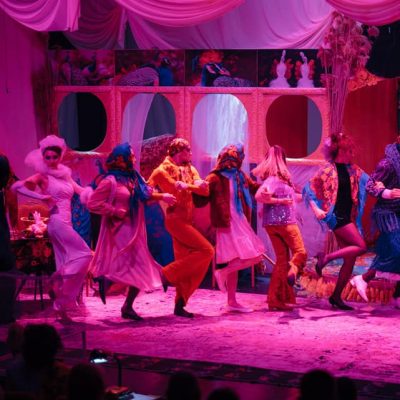
Geneza Art Theatre is one of the independent theaters in Moldova. The “debut” of the Theatre took place in January 2010 with the performance “Blue Flower,” a tribute to the great poet Mihai Eminescu’s “blond angel” poet Veronica Micle.
The year 2017 is the year in which the 8th season opens, having in its artistic palmares about twenty shows staged, ten of which are included in the repertoire for the current season.
Its main objective is to promote young actors and to choose a repertoire that is accessible to all ages but also authentic, drawing from the multicolored amalgam of states and situations that life offers us. A classic theater with a contemporary vision in the full sense of the word.
Each show has its own individuality and is conceived with team ambition, and the scenography of the shows is a representative axis of the Theatre, marking a non-conformist and personalized stylistics and aesthetics.
The Theatre advocates the exclusion of stereotypes in theatrical art; it is open to courageous theatrical experiments of the highest relevance.
The Theatre’s performances are awarded at festivals, nominated at the “UNITEM Gala,” and some of them are transmitted to the Public Company Teleradio-Moldova (TRM) for broadcasting on small screens.
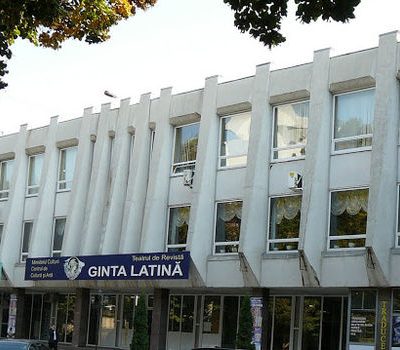
Centre for Culture and Arts “Ginta Latina”/Theatre with no name
History of Creation: The Republican Theatre for Children and Youth was established on August 1, 1989, by the esteemed theater [..]
Centre for Culture and Arts “Ginta Latina”/Theatre with no name
History of Creation:
The Republican Theatre for Children and Youth was established on August 1, 1989, by the esteemed theater figure of the Republic of Moldova, Ion Sandri Șcurea. Since February 2018, the theater has been renamed “Theatre Without a Name” and is now part of the Centre of Culture and Arts “Ginta Latina.”
The initiative to rename the theater was introduced by the artistic director, Mihai Țărnă. Through this change, the theater has provided itself with an opportunity for a new existence and a fresh approach to connecting with the audience.
“Once you step into the theater, you leave your name behind, and you have two hours to be a person without a name or to become someone else. We simply choose to be. We don’t seek prominence; we enter into memory…”
Founded in October 1945, immediately after the Second World War, the Republican Puppet Theater “Licurici” remains an exceptional cultural center, [..]
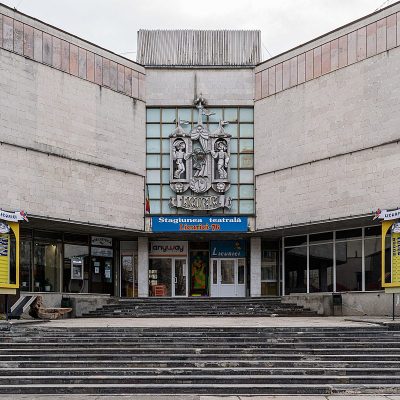
Republican Puppet Theatre “Licurici”/”Fireflies”
Founded in October 1945, immediately after the Second World War, the Republican Puppet Theater “Licurici” remains an exceptional cultural center, presenting shows for all ages. The theater began its activity with the show “The Gazebo” by S. Marsak, reflecting the Moldovan-Russian-Ukrainian cultural relations established immediately after the war.
Professionalism and beautiful spiritual traditions attract approximately 100,000 spectators to its hall each year, showcasing over 500 shows both within the country and abroad. Over the course of 75 years, the theater has staged more than 300 shows based on the most famous fairy tales by H.C. Andersen, Brothers Grimm, Carlo Collodi, A. de Saint-Exupery, J. Rodari, A.S. Pushkin, N.V. Gogol, Mihai Eminescu, and Ion Creanga. The works of contemporary Moldovan playwrights such as P. Carare, Gh. Urschi, E. Plugaru, V. Grosu, L. Sobietschy, A. Strîmbeanu, I. Filip, V. Boldisor, Gr. Vieru have also achieved success.
The Theater operates with two troupes—the Romanian language troupe and the Russian language troupe. Some shows are additionally translated into Italian, German, Spanish, and French.
“Licurici” has educated generations of young spectators with important human values such as goodness, beauty, and sincerity. The puppetry from “Licurici” tells genuine stories, transporting the audience into the enchanted world of fairy tales and fiction. Children and the elderly alike have admired and applauded various types of dolls, vivid shadows, and charming masks.
Titus Jucov, the artistic director, actor, and general director, led the theater for 38 years, curating national and universal drama, and building a unique image for his creative team.
It was founded on November 5, 1934, in Tiraspol. The first show staged was “Hate” by S. Ialțev. In 1940, [..]
Russian State Drama Theater “A. P. Cehov”
It was founded on November 5, 1934, in Tiraspol. The first show staged was “Hate” by S. Ialțev. In 1940, the theater moved to Chisinau, where in the same year it presented the show “Unchaining” by B. Lavreniov. During the Second World War, the theater was evacuated to Turkmenistan, where it staged productions such as “Russian People” by C. Simonov, “Partisans in the Steppes of Ukraine” by A. Korneiciuc, “Machenka” by A. Afinoghenov, “Guilty without guilt” by A. Ostrovskii, and others.
Upon returning to Chisinau in 1944, the theater continued to stage plays from classical and contemporary Russian drama. Additionally, original performances were produced based on the works of Moldovan playwrights, including “When the Grape Ripens” by P. Darienco (1960), “The Source of Brotherhood” by L. Corneanu (1964), “And Under That Sky…” by A. Busuioc (1980), “The Year of Death, the Year of Immortality” by I. Druță (1982), “Badea Cozma” based on G. Malciuc (1984), and more.
From 1985 onward, Veniamin Apostol, an esteemed master of art from the Moldavian SSR, served as the theater’s chief director until his passing. The theater conducted numerous tours in Moscow, Leningrad, Kiev, Odessa, Breansc, Krasnodar, Stavropol, with its performances earning high praise from audiences.
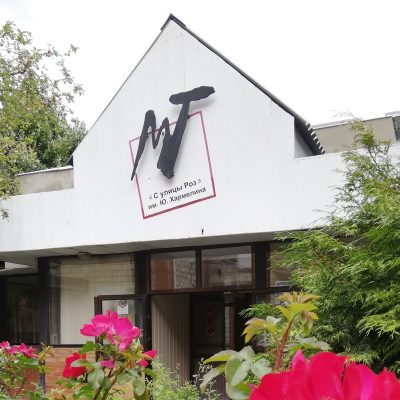
Municipal Drama Theatre of “On the Street of Roses”
The Russian Drama Theatre was established in 1978 in Chisinau as a studio theatre. The theater’s repertoire includes contemporary plays [..]
Municipal Drama Theatre of “On the Street of Roses”
The Russian Drama Theatre was established in 1978 in Chisinau as a studio theatre. The theater’s repertoire includes contemporary plays by Russian and European playwrights. The theater gained recognition and popularity among the audience due to its unique repertoire and talented young actors. However, in the 1990s, many of the theater’s leading actors left for various theatrical institutions in Russia.
Over the course of 30 years, the theater has produced more than 150 performances of Russian and world drama. In 1995, Yurii Harmelin founded the Municipal Theatre Lyceum, which became a nurturing ground for young talent. Unfortunately, the 33rd theater season (2010-2011) began without the renowned actress, People’s Artist Eugenia Todorasco, who had performed on the theater stage for seven consecutive years.
The Municipal Drama Theatre “On the Street of Roses” is the organizer of the International Festival of Chamber Theatres and Small Form Performances “Moldfest.Rampa.Ru.” The first edition of the festival took place in November 2009, featuring 15 theaters from Moldova, Romania, Ukraine, Russia, Belarus, Israel, and Germany.
In 2020, the Government of the Republic of Moldova approved the decision to name the Drama Theatre “S Ulitî Roz”/”On the Street of Roses” after its founder, Iurie Harmelin.
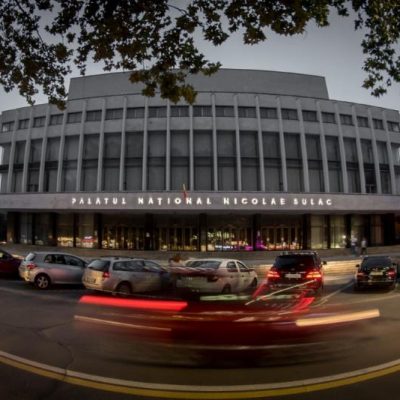
It is a concert and festival venue in the center of Chisinau. The construction of the Palace was completed in [..]
The National Palace “Nicolae Sulac”
It is a concert and festival venue in the center of Chisinau. The construction of the Palace was completed in 1972, and at that time, it was called Sala de Sesiuni (Hall of Sessions), where theater and entertainment performances were organized. It was later renamed in honor of the folk singer Nicolae Sulac (1936-2003).

 English
 Română
  Русский