The central park in Chisinau, Moldova, is the oldest park in the country, covering approximately 7 hectares (17 acres). Originally [..]
Public Garden Stephen the Great (Central Park)
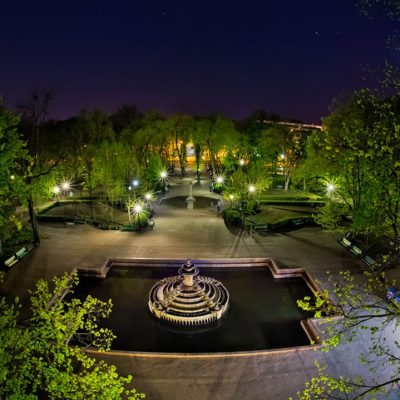
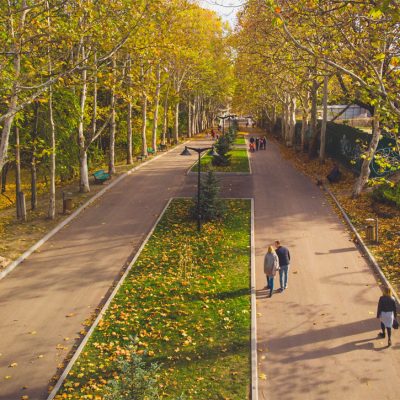
The central park in Chisinau, Moldova, is the oldest park in the country, covering approximately 7 hectares (17 acres). Originally designed in 1818 by Russian military engineers during the reign of Alexander I, the park has undergone several name changes over the years, including Alexander Garden (honoring Emperor Alexander II), Alexander Pushkin Park, and City Public Garden.
Under the guidance of architect Bogdan Eitner, the present-day alleys were established, featuring hundreds of acacias, limes, and flower beds. The park, initially enclosed by a wicker fence, was later surrounded by a cast-iron fence erected in 1868-1869, which still stands today. The park boasts seven entrances around its perimeter, hosting approximately 50 species of shrubs and trees, some dating back almost 200 years, including a towering acacia.
In 1885, the monument to the Russian poet A.S. Pushkin was unveiled in the Public Garden, considered today as the oldest preserved bust in the city. In 1958, the cornerstone of the Alley of the Classics of Romanian Literature was laid, initially featuring 12 bronze busts of classics on polished red granite posts. The current Alley of Classics has 29 busts of prominent personalities, and various cultural events are held there.
A significant masterpiece in the park is the monument to Stephen the Great and Holy, created by sculptor A. Plamadeala and architect A. Bernardazzi. Inaugurated in 1928, the monument commemorates the tenth anniversary of the Great Union of 1918.
Guarding one of the park entrances are two marble lions, their origin shrouded in mystery. Rumors suggest they belonged to a manor house, and after its destruction during World War II, the monuments were brought and installed in the Public Garden.
It was established between 1830 and 1840, coinciding with the construction of the Cathedral. Following World War II, the square [..]
Cathedral Square
It was established between 1830 and 1840, coinciding with the construction of the Cathedral.
Following World War II, the square suffered significant damage. It underwent extensive restoration over the subsequent years and was named Victory Park for an extended period. The park underwent landscaping efforts, with the planting of trees, shrubs, and flower beds throughout.
Presently, the square covers an area of only 9 hectares, slightly less than the original 12 hectares. The highlight of the architectural ensemble is the Metropolitan Cathedral, which, along with the Bell Tower and the Triumphal Arch, constitutes the renowned historical complex of the capital.
In 1962, during the era of the USSR, the Bell Tower was demolished by order of N. Khrushchev, citing concerns about its potential use as a strategic point for snipers. A flowing fountain was erected in place of the bell tower, and, for several years, the Ministry of Culture of the MSSR operated an exhibition hall inside the Cathedral.
In 1998, the Bell Tower was reconstructed based on historical images, reclaiming its position within this splendid architectural complex.
The central area of the park boasts a large open space, while shaded side alleys cater to visitors seeking refuge from the sun. Numerous ornamental trees and shrubs, some exceeding a century in age, adorn the park. This venue has become a focal point for major events on official national and religious holidays.
Cathedral Square stands out as a beloved destination for every tourist and guest of the capital.
The Dendrarium Park in Chisinau is an 83-hectare green oasis situated in the Buiucani district. Serving as a crucial oxygen [..]
The Dendrarium Park
The Dendrarium Park in Chisinau is an 83-hectare green oasis situated in the Buiucani district. Serving as a crucial oxygen reservoir for the city’s inhabitants, it functions as a natural air filter. This lush expanse is not only cherished by city dwellers but is also a popular spot for capturing memorable photographs. The Dendrarium earned state protection on 16 July 1998.
Since the initial planting of trees and shrubs in the early 1950s, the Dendrarium has cultivated a significant seed fund containing rare and highly decorative plants, totaling 1,820 taxa. Notably, the park hosts 9 out of the 13 species of woody plants listed in the Red Book of the Republic of Moldova.
In addition to these botanical rarities, the park is home to extremely rare endemic relicts. An exemplary case is the Ginkgo biloba, first discovered in Japan in 1690, representing the sole survivor of the ginkgo class from the Triassic period.
Dendrarium Park offers a serene atmosphere, shielded from urban noise, allowing visitors to momentarily forget they are in the city center. The tranquility of the park makes it an ideal escape, emphasizing its role not only as a green space but also as a sanctuary from the hustle and bustle of urban life.
The Chisinau Botanical Garden of the Academy of Sciences of Moldova stands as the primary botanical research institution in the [..]
Botanical Garden
The Chisinau Botanical Garden of the Academy of Sciences of Moldova stands as the primary botanical research institution in the country. Situated on the outskirts of Chisinau, in the Botanica district, near the renowned City Gates, this botanical haven has been a focal point for plant research since its establishment on 1 September 1951.
The construction of the Botanical Garden adhered to the ecological-systematic principle, arranging plant groups in a land-shelter style, facilitating the study of vegetation. Organized into distinct sectors, some open-air sectors host frost-resistant annual plants, while others, located in covered spaces, safeguard living or variously preserved plants.
Among the most frequented sectors by visitors are the Alpinarium (housing around 50 species), Dendrarium (with approximately 560 species), Flora Moldovei (showcasing 30 tree species, 18 shrub species, and 110 grass species), Pinarium, Rozarium, Floriculture, Syringarium, and, notably, the Tropical and Subtropical Plants sector (featuring about 2550 species) collected from around the globe.
However, the Botanical Garden faced a significant setback in April 2017 when heavy snowfall resulted in the loss and damage of 80% of the decorative trees and shrubs within the park’s collections and exhibitions. Despite this setback, the Botanical Garden has gradually rejuvenated itself, once again becoming a source of delight for the capital’s residents and guests, boasting exquisite plant collections that enchant throughout every season of the year.
In the western part of the city, situated within the Buiucani district, lies a modest park covering just 11 hectares [..]
Park ”Alunelul”
In the western part of the city, situated within the Buiucani district, lies a modest park covering just 11 hectares – “Alunelul” Park. Established in 1958, this park occupies the grounds of a former Jewish cemetery. A portion of the cemetery was dismantled, and some remains were relocated to a new cemetery nearby.
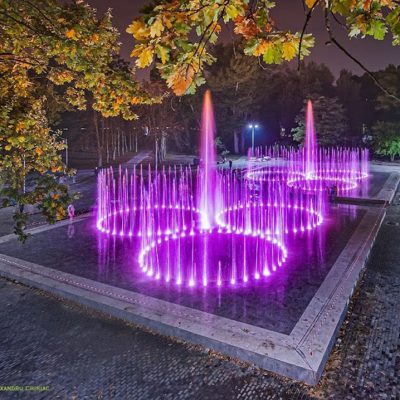
Nestled deep within the park is the memorial complex dedicated to the victims of the 1903 Chisinau pogrom, which was erected in 1993. Notably, Alunelul Park underwent a splendid renovation at the end of 2020, much to the joy of both locals and visitors to the capital. The park’s focal point is the multicolored flowing fountain, featuring 284 water jets and lights. During the summer, these water jets dance to the rhythm of the music, reaching impressive heights.
This is the unofficial name of the park situated in the center of Rascani district, the focal point of which [..]
“Afghanistan” Park
This is the unofficial name of the park situated in the center of Rascani district, the focal point of which is the Memorial Complex “Sons of the Fatherland – Holy Remembrance,” constructed in memory of the fallen soldiers in the war in Afghanistan from 1979 to 1989.
The complex showcases a majestic sculpture depicting a bereaved mother and a structure consisting of white pillars reaching towards the sky. Five meters above the ground, the pillars converge at a crown of bronze thorns. Granite plaques bearing the names of the fallen soldiers encircle the monument. The overall height of the monument is 15 meters.
Erected in 2007, the project’s architects are V. Eremciuc and the sculptor B. Dubrovin. The memorial is surrounded by a cascade of fountains, enhancing the solemn atmosphere of remembrance.
The park was initially named the “Friendship Park between Peoples” and held this designation for 20 years. Established in 1972 [..]
Park ”La Izvor”
The park was initially named the “Friendship Park between Peoples” and held this designation for 20 years. Established in 1972 on Calea Ieșilor Street in the Buiucani district, it stands as one of the youngest parks in Chisinau, covering an extensive area of 150 hectares. The park’s lakes form a picturesque cascade of ponds connected by canals.
A notable feature is the Story Island, situated on the largest pond, which used to host enjoyable activities for both children and adults. Accessible via a charming bridge, the island also offers a boat landing on the other side for those wishing to venture to the island by boat.
Nestled deep within the park is the enchanting restaurant ‘La izvor.’
Adding to the park’s allure is a suspension bridge, seamlessly extending from the central walkway, providing visitors with an additional point of interest.
The park, located in the Buiucani district of the capital, has a storied history since its establishment in 1950 on [..]
The Valley of the Mills Park
The park, located in the Buiucani district of the capital, has a storied history since its establishment in 1950 on the initiative of L. Brezhnev, originally named the “Central Park of Culture and Rest of the Leninist Commune.” Over the years, it has evolved into a significant recreational hub for the city.
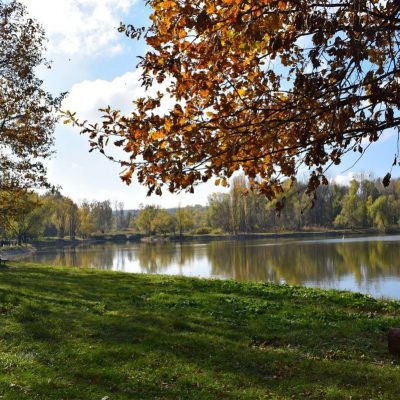
Situated along the shore of Mill Valley Lake, the park sprawls across an expansive 114 hectares, with the lake itself covering an area of 34 hectares. The park’s design was orchestrated under the guidance of the renowned architect Robert Kurz.
Within the park’s vast expanse, visitors can enjoy various amenities, including the Green Theatre—an open-air venue with a seating capacity of 5000—a day cinema, the “Andries” children’s playground, a beach, and a boat station, among others.
The lake park has served as a nucleus for diverse water sports, hosting three rowing schools, sports fields, and fishing spots for enthusiasts. During winter, the lake transforms into an urban ice rink, and a once-prominent parachute jump tower added to the park’s attractions.
Adjacent to the park stands Moldova’s largest exhibition center—Moldexpo—further enhancing the area’s significance.
The park gained additional renown through the recent restoration of the rotunda and the Cascades Staircase. The latter, comprised of 218 steps, surpasses the famous General Potemkin Staircase in Odessa, which boasts 200 steps, adding to the allure of this expansive and historically rich green space.
The Green Theatre in Chisinau is a true gem for both citizens and tourists, situated in Valea Morilor Park in [..]
Green Theater
The Green Theatre in Chisinau is a true gem for both citizens and tourists, situated in Valea Morilor Park in the capital.
The Green Theatre, formerly known as the Summer Theatre, was constructed 60 years ago by architects A. Kolotovkin and T. Lomova.
An open-air theatre with a beautiful stage and hundreds of benches, it serves as a perfect example of Soviet architecture from the 1960s.
In every large park in the Soviet Union, there were numerous summer theatres. Chisinau, being one of the greenest capitals in Europe, was an excellent illustration of this. Summer theatres acted as public stages where the local community could enjoy various theatre performances, folk dances, and song competitions. Everyone was completely free to showcase their talent or passion in front of the community. Now, following rehabilitation, the Green Theatre hosts the most exquisite concerts featuring nationally and internationally renowned performers.
Thanks to the theatre’s central location in the heart of Valea Morilor Park, it is an ideal venue for hosting a variety of events during the warm season.
The Cascades Staircase, a symbol of the capital located in the Valley of the Mills Park, was constructed as early [..]
The Cascades Staircase
The Cascades Staircase, a symbol of the capital located in the Valley of the Mills Park, was constructed as early as the 1950s and became a beloved destination for young people, particularly couples, to stroll. Unfortunately, after the collapse of the USSR, the staircase fell into disrepair and remained neglected until its rehabilitation in 2016.
The city’s architects dedicated months to the project, relying on the limited pictures and sketches available in the archives. The staircase’s structure featured numerous sculptures, prompting specialists to use photos from the personal archives of Chisinau residents to restore intricate details.
The cascading staircase boasts a total of 218 steps, which is 18 more than the renowned Potemkin Staircase in Odessa.
At the border between two districts of Chisinau – Ciocana and Riscani, there is a park, founded in 1970, formed [..]
Râscani Forest-Park
At the border between two districts of Chisinau – Ciocana and Riscani, there is a park, founded in 1970, formed on the basis of a natural forest massif. In Soviet times the park was named after Boris Glavan. The total area of the park is 32 hectares. The park is divided into two parts by the intersecting Aleco Russo Street. On both sides of the park there are lakes, which are second in size to the one in the Valley of the Mills. The park is located along Dimo Street in Riscani and Sadoveanu Street in Ciocana. It is the favourite resting place of the inhabitants of two districts of Chisinau and one of the most visited parks of the capital. The park is also interesting because the upper part of the park, at Ciocana, is mostly covered with leafy trees, while the lower part, towards Rîșcani, is mostly dominated by pine forest, planted when the park was founded. The park is very picturesque at any time of the year, especially in spring and late autumn. From the higher ground there is an excellent view of the city. Much neater is the part of the park to the right of A. L. Russo Street, if you look towards Ciocana. Here there are resting places, an amphitheatre and a children’s playground, a boat station and a sandy beach. The lakes on both sides of the park are heavily polluted and bathing is forbidden because they have not been cleaned for a long time. But even here you can meet fishermen. In the cold winters there are makeshift skating rinks on the lakes, and children can go sledging on the park’s steep paths.
The Alley of Painters is situated on the periphery of Cathedral Square, adjacent to the “Eugen Doga” Pedestrian Street. This [..]
The Alley of Painters
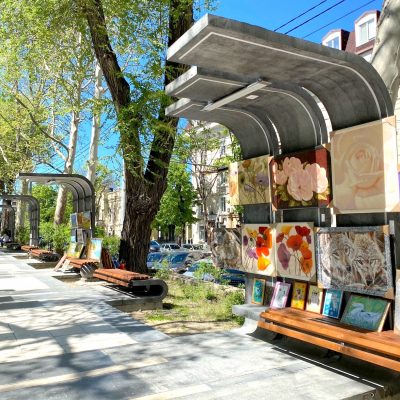
The Alley of Painters is situated on the periphery of Cathedral Square, adjacent to the “Eugen Doga” Pedestrian Street. This municipal project, conceived in 2021, incorporates 20 concrete supports, each spanning 3 meters in width, designed as display areas for painters. The stands are encased in robust metal structures. Architect Alexandru Sava is credited as the designer behind the project for the Alley of Painters on Columna Street.
Valea Trandafirilor (The Valley of Roses) is a renowned park situated in the Botanica district, spanning an impressive area of [..]
The Valley of Roses
Valea Trandafirilor (The Valley of Roses) is a renowned park situated in the Botanica district, spanning an impressive area of 145 hectares, with 9 hectares dedicated to the lake within its bounds. Established in 1968, the park holds a unique history, having been arranged on the grounds of a hill that locals cultivated for many years with roses. This tradition, involving the preparation of the famous Chisinau jam from rose petals, has endured, with the park continuing to introduce special and fragrant species of roses each year. It is from this rich tradition that the park derives its name – the Valley of Roses.
During the communist period, the park bore the name “Lenin City Park of Culture and Leisure.”
Within the park’s expansive grounds, visitors can find several restaurants, landscaped beaches along the lake, children’s playgrounds, and sports fields.
Adjacent to Trandafirilor Street at the park’s edge stands the Chernobyl Victims Memorial, commemorating the tragic events of Chernobyl.
For recreation and entertainment, the park hosts an amusement area catering to both children and adults. Notably, this area features the only Ferris Wheel in Chisinau, reaching a height of 20 meters, affectionately referred to as the “devil’s wheel” by the locals.
he TUM Park was conceived in 2004 through the initiative of Mr. Ion Bostan, who served as TUM’s rector from [..]
Park of the Technical University of Moldova
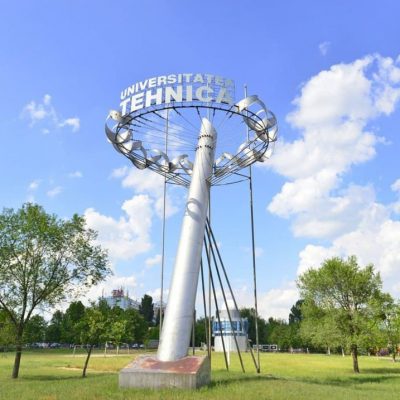
he TUM Park was conceived in 2004 through the initiative of Mr. Ion Bostan, who served as TUM’s rector from 1992 to 2015, with the intention of creating an open-air technical museum.
Within this park, visitors have the opportunity to admire an impressive gallery of exhibits displayed in the open air. These include the TUM Stela, symbolizing technical education, and the Thinker’s sculpture, representing the creative thinking of human society. The exhibits range from symbols of the first inventions of humanity, such as the lighting of fire by spark, to the most modern and ingenious innovations. Notably, many of these exhibits were created or reconstructed by the University’s students and teachers.
The park also houses helicopters and trams from the last century, with one tram being particularly unusual – pulled by two iron horses, reminiscent of the famous horse-drawn tram that operated in Chisinau on the central Alexandru cel Bun Street (now Boulevard Stephen the Great and Holy) in the 1930s and 1940s.
In the park’s center, a unique fountain adorned with steel sculptures of the 12 zodiac signs serves as a distinctive feature.
Even the benches installed in the park are unique creations, embodying two intertwined universal symbols – the heart and the infinite. These benches, affectionately nicknamed the ‘Lovers’ Benches,’ add a special touch to the park’s atmosphere.

 English
 Română
  Русский